Search

Thursday, January 16, 2025

Misoforms

Discussion of topics such as sexual violence and trauma. Discretion advised.

The phenomenon of being particularly perturbed by a specific auditory stimulus, be it someone chewing with their mouth open or the squelch of bubble wrap pulled taut, is referred to as misophonia. The etymology can be traced to the suffix -phon, referring to sound, and the prefix miso-, meaning "hate." These are the sounds that you especially hate, like the proverbial nail/chalkboard affair.

However, as the experience of being particularly affected by something is not exclusive to painful sounds, I have taken to broadly calling similarly individualized irritants or triggers: “misoforms.” This isn’t a professional term; rather it is one I’ve privately adopted to describe an unusually potent kind of trigger, specifically one found in the professional field where little else seems to have such a profound effect.

In fields saturated with tragedy, such as public safety, law enforcement, or intervention services, we all have misoforms-- even dispatchers, who take disturbing calls for a living. 

For many, anything involving a vulnerable population can be particularly disturbing, with many dispatchers finding calls from or about children, the elderly, or members of the disabled community to be their personal misoforms. Some are bothered more by the scope of an event than the demographics involved, such as mass casualty incidents, while still others may be sensitive to brutal injuries, harm to animals, or sudden loss of life.

My own personal misoform, likely a result of both first- and second-hand experience, is also a common one: nothing stays with me quite like stories of sexual violence. 

I knew going into this job that I’d eventually encounter it. After all, when one in four women will face some form of sexual harassment, when one in six are victims of a completed or attempted rape, when roughly ten percent of children are victims of sexual abuse-- it’s not as though this is a fringe issue. These are realities that every safety whistle vendor and YouTube social commentator is vividly aware of. They are fears that every kid who walks to the bus stop alone and every woman who’s ever found herself in a dark alley at night have to face.

Amidst the current cultural revolution of the twenty-first century, there’s no paucity of narratives on the issue. Countless essays, articles, and news stories present the information again and again, while slam poems by students fed up with being reduced to a grim statistic and testimonies aiming to biopsy rape culture all flood the expositional marketplace. 

In short, there’s not much use in yet another blog post rehashing how shockingly pervasive sexual violence is or driving home how pernicious the effects of it are. Instead, what I’d like to offer is the story of my first professional exposure to sexual violence, and explore the strange (and often counterintuitive) ways in which we process our misoforms in the professional field. 

About a year ago, when I was first considering whether or not to seriously pursue this career, I wanted to be sure that I was going to be able to handle the harder aspects of the job. So, I started watching and listening to things like 9-1-1 call recordings, criminal interrogations, and body cam footage from disaster scenes, trying especially to place myself in the shoes of the call-taker processing a difficult call. By the time I felt sure about going forward in the application process, I had already come across many accounts of sexual violence, and none of them had me reevaluating whether I really wanted to leave my old job. 

But I knew it would be a different story once I had taken a call for it myself, which brings this story up to the present. 

The 9-1-1 call came in at shift change. I grabbed instinctively for the phone, despite the fact that Dave was pretty much set up to take over operation by then. Tired, wired, and mentally half clocked out as I already was, I should’ve let him.

The caller explained to me that she and her husband have been having issues, and that lately they haven’t been getting along at all. Today, she said, he had exposed himself to her, demanding that she help him get off. 

While I set about dispatching the call, I realized that I had no idea how to phrase what she was describing. Her tone didn't reveal any fear-- in fact, she sounded somewhere between annoyed and petulant. There were no sounds of a struggle; as far as I could tell, she was just as aggressively arguing with him as he was with her. I could hear her in the background, calling him a pig, although I could hear nothing from him.

For a moment I deliberated between dispatching this as a verbal altercation, or a sexual assault. Even though the latter was, by definition, accurate, sending my officers into the situation with the words, “sexual assault in progress” was priming them to go in guns blazing, potentially escalating something that needn’t otherwise get physical. I needed more information, but the caller had already hung up.

Unsure of what else to do, I hit redial, then gave the transmission out as vaguely as I could, hoping in vain that she’d pick up before the inevitable requests for more information started flooding in. All the while, the phone in my ear just rang and rang, and I gritted my teeth, knowing already that she wouldn't be answering my callback. Who ignores a call from 9-1-1? I thought, irritated.

Well, a little voice inside me said. Is that really so bad? It clearly isn’t a real sexual assault, is it? 

This sudden, captious  thought, nearly unrecognizable in its acrimony as my own, brought me up short. I tried to shut it down, but the internal voice insisted: That’s not what real victims sound like and you know it. She’s using 9-1-1 as a scare tactic to win a fight. Her husband may be a pig, but she’s--

I bit down suddenly on the inside of my cheek, so hard it drew blood. The sharp pain cleared my head, silencing that awful internal voice I didn’t want to believe could be my own.

Cognitively, I knew that what it said was untrue, or at the very least, irrelevant. From a dispatch perspective, it doesn’t matter whether he actually intended to assault her or not. The only thing that mattered was that she felt the situation warranted emergency response, and it was my job to make sure she got just that. 

But emotionally, something else was happening inside me, and I wasn’t exactly in a place to address it.

When the officers arrived on scene, Dave was able to take over, and he shooed me away from the dispatch desk. My hands were still shaking as I packed up to leave. On my way out, I slipped into the bathroom, desperate for a moment of peace in which to collect myself. 

Leaning over the sink, I stared hard into the mirror, searching the eyes of the person looking back at me. Who are you? I demanded silently. Who are you to pass judgment on someone you once committed to being an ally to? 

For years, I've parroted that marital rape is still rape, that there's no excuse for sexual harassment, and that we all need to believe victims. In all of my pre-employment research, I’d listened to calls reporting sexual assaults of all kinds, and every time I had felt the same thing towards the callers: compassion. I always thought that the same compassion would be my first instinct if (or rather when) I eventually took a call like this, empathizing with anyone who’s experienced the same kind of violence as I have.

But as soon as I was faced with a caller who didn’t sound exactly like I thought she should, as soon as I was faced with an “imperfect victim,” I was suddenly spouting all sorts of virulent rhetoric. Where had this sudden onset of victim blaming and judgment come from? It was as if there was a little pick-me hiding beneath the façade: pick me! I’m not like other victims! I did everything right, so what happened to me couldn’t have been my fault-- not like this victim, who was clearly-- 

Clearly... what? "Asking for it?" Somehow more "deserving of it" than me? 
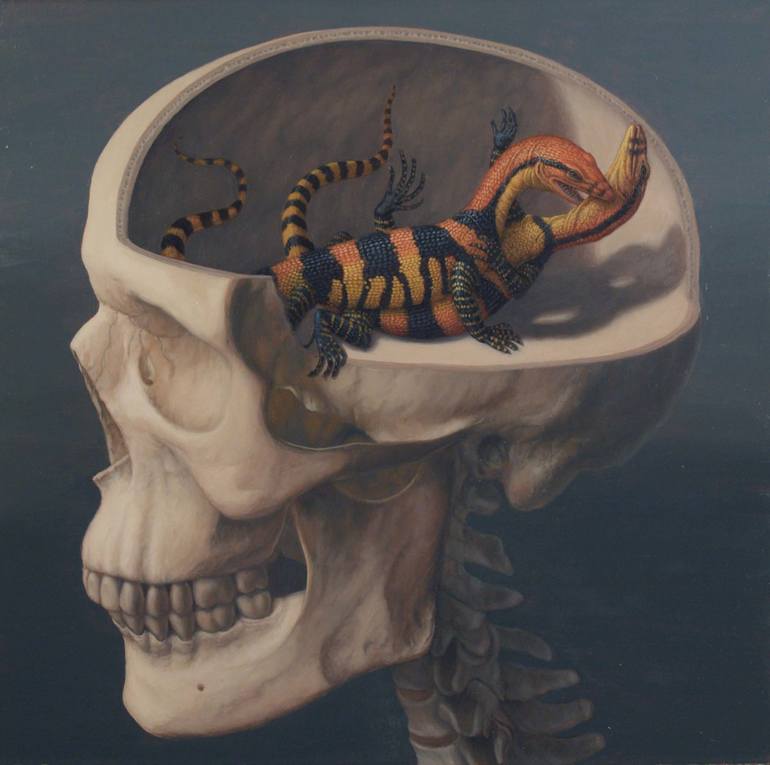
Sandra Yagi: "The Lizard Part of my Brain #2"
It wasn’t like I actually believed that, even for a second. Coercion was just as inexcusable as rape, marital status was never a defense, and certainly the disposition of the victim never invalidates their claim. But the thought had to have come from somewhere, right? Where in my primordial lizard brain had this nasty little thing come crawling up from, like a monster out of Tartarus?

That morning, I went to sleep feeling irredeemable, but a full night of sleep helped me gain a bit of distance.  Talking through the experience with Gabe and Kara gave me a sense of peace, as I gave a name to the nameless, nebulous darkness clouding my thoughts. Writing up an email to Kenneth about how I might’ve better handled dispatching the call helped me understand how it had affected me, and hopefully allowed for some professional growth, too.

In the end, I came to the conclusion that taking this call had dredged up something in me from a long time ago, a helplessness that I had thought myself past. Listening to her made me remember the isolation, hopelessness, and despair I’d once left behind, and instead of seeing that resurgence as a reason to sympathize with her, I had automatically associated it with-- and therefore projected it onto-- her. 

"This call is upsetting me" became “It’s her fault I feel this way,” which in turn became “it’s her fault this is happening at all": a lie from which nobody walks away unscathed. Hating this woman was nothing more than a misplaced attempt to regain control over the uncontrollable, to further distance myself from my past.
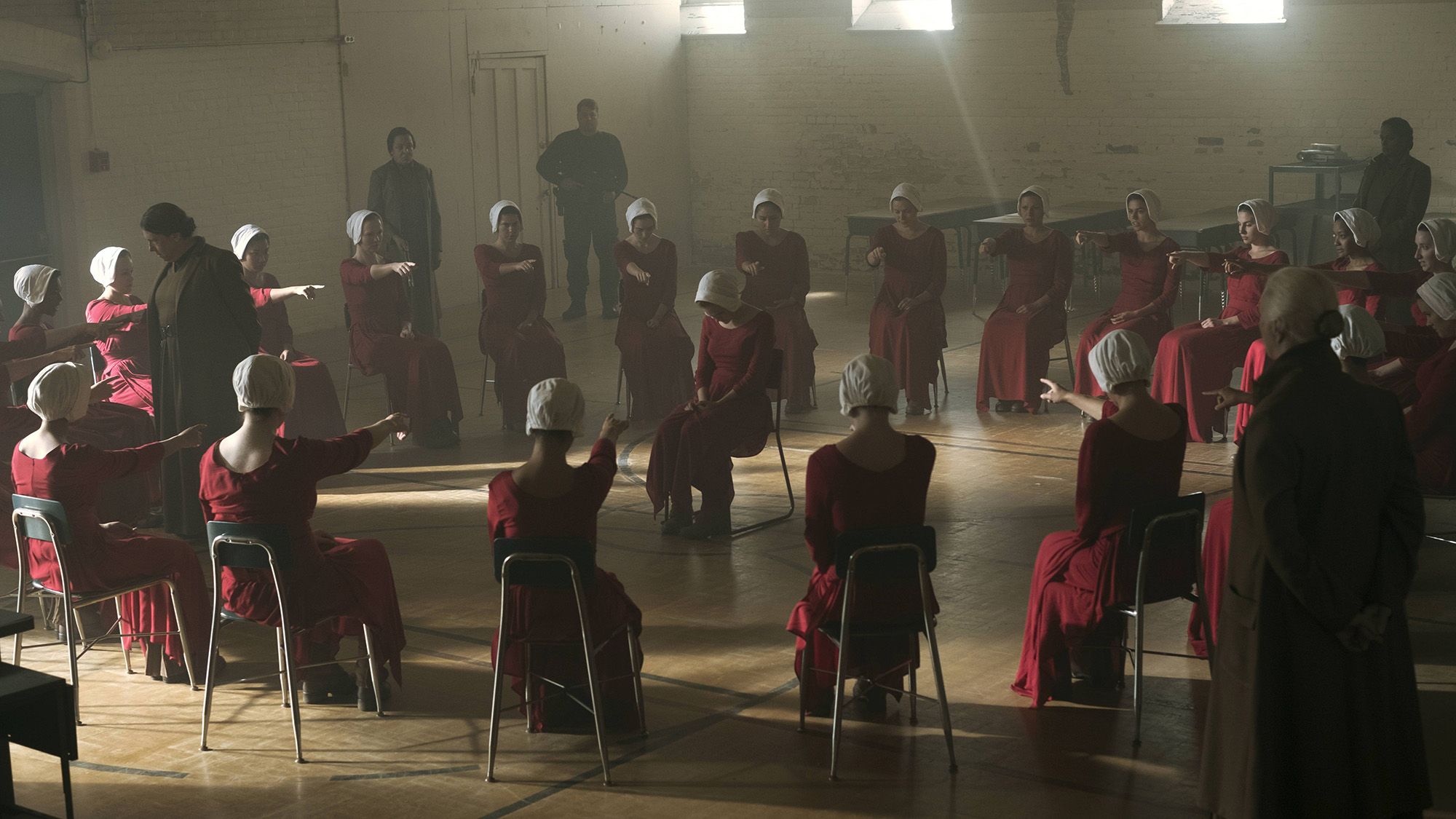
"Her fault. Her fault." The Handmaid's Tale, 2017.

Kara reminded me that the first response you have to something is your conditioned response, whether that be from a pervasive social narrative or the survival instincts of a traumatized psyche. It's your second response, the one you intentionally choose and act upon, that reveals your values and beliefs. Intrusive thoughts may often be a result of trying to deflect from a sore spot, some abscess that resists being drained, for so long as it has been hidden out of sight.

Sexual violence is my misoform, and no amount of dispatch training is going to prepare me 100% for everything I might deal with. This wouldn't make it okay for me to start engaging with rape culture propaganda, but it does explain where that odious little voice came from. It would never make it okay to mishandle or ignore anybody's call for help, but understanding  how complex PTSD wreaks havoc on the mind can lend legitimacy to my fight against my own internalized issues, however natural they may be.

I am fortunate enough to have many people in my life willing to lend me their strength in this fight. Connections are what get us through this shit, but they're not enough. I also have to have compassion enough for the survivor inside me, to forgive her when trauma rears its ugly head.  
Monday, December 9, 2024

A Night in the Life

Day 1

0652. Medical comes in just before shift change, meaning it’s a cluster and a half (sorry, Ms. Carol, the guys were fighting over whose turn it was to deal with you and your angina this time). I should be on my way home, but I've gotta stay late so I don't saddle the morning shift with the burden of a half-finished call.

In the middle of the mess, Officer Areyougoingforaworldrecordintrafficstops? (nice name you got there / thanks, it’s German) has to get one last traffic stop in. Hey, here's an idea. If a medical call is currently being dispatched, instead of making me juggle that and your unnecessary traffic stops-- I don't know, maybe go to it?

0734. Thank you for threatening to pull me over for my broken tail light on my way into work tonight, Officer Hardass. I can’t even tell if you’re kidding or not. Guess I better go to the nearest auto parts store and replace my brake light in the freezing cold. 

0812. Good thing I did it here in the store parking lot before I left, because you guys sold me the wrong bulb. Oh, you don’t have the one I need? Great. Can I get that in writing for Hardass? Also, I was shivering so hard that when I tried to take the ill-fitting one out that I dropped it and it broke. But at least I’ve got the rest of the day to myself. Right?

828. Oops, I forgot that I agreed to tutor my GED student today. Was expecting to have the rest of the day, but hey, it’s for a good cause. I still have all afternoon to sleep and shower. 

1100. Call from my Lieutenant. Did I want today’s eve shift for overtime? I jumped for it. Eves are my favorite shift, after all, and every overtime shift that I put straight towards my student loans brings me 0.01083% closer to financial freedom.

1101. Realized that now I had to be back at the station in four hours, and we’re in the middle of a quiz. Too polite to kick my pupil out mid-quiz, I silently resign myself to not getting a shower today. 

1205. Finally, bed. Two blissful hours of--

1415. GOD that alarm is loud. Gotta get up and haul ass. No time to primp, just throw a bandana on, fresh uniform— aaaaand it’s damp.

Day 2

1500. Freezing My Butt Off Because My Uniform is WET and Dispatch is COLD.

1655. Remembered that as the dispatcher, I’m in charge of the dispatch office, and therefore I control the thermostat. Cranks heat. 

1938. Relentlessly mocked by Lieutenant about keeping Dispatch a sauna.

1941: Retaliated by playing up the cold symptoms related to an ongoing, non-contagious sinus infection, then fake sneezing on said (germaphobic) Lieutenant.

1956: Noise complaint from a guy whose neighbors are watching a movie "so loudly it sounds like World War Four in there." (I'm sorry, did I miss World War Three somehow? Any particular reason we jump right to four?)

2056: I should make some coffee. I sure hope the coffee machine isn't-

2057:

Understandable Have a Great Day but its Blank Meme Generator - Imgflip

2143. Where’s Officer Goingforarecord when you need him? At least the constant traffic stops would be something to keep me awake. I guess the fact that the sun was out helped me forget that three in the afternoon to a night shift person is like everyone else's three in the morning.

2300:

0000: Is it seriously only midnight?

0100:

0200:

0300:

0400: My favorite officer to chat with has decided to let me talk his ear off. While I’d like to believe I am simply that good company, I also suspect that it’s because my mindless chatter is impossible to sleep through. He looks about as tired as I feel.

0500: After talking pretty much nonstop for an hour, my voice hurts. But if I stop, I’ll lose the momentum and adrenaline of a mostly one-sided conversation about the relative benefits of being a bandana girl. Sure, it’s not exactly a runway-worthy fashion statement, but can you tell how long it’s been since I washed my hair? 

0549: I wonder if this would make an interesting blog entry? Dispatch: A Night in the Life. 


0601: Should I at least format it into essay style? 

0636: Too tired. Transcript will have to suffice.

0639: I swear I know how to spell the word lieutenant, Mrs. Overton, my dearest seventh grade English teacher. I even use the pneumonic you taught us: lie-to-u-about-ten-ants. I’m just so tired, my brain won’t cooperate. (I won’t even tell you how many times it took me to spell pneumonic.)

0646: Wait, why would an officer lie about ants? Do we have ants in the station???

0649: I guess after the mouse that Dave’s mousetrap caught, a few ants shouldn’t be too much concern. 

0651: Almost time to...

0652: You have got to be kidding me, Carol.

Tuesday, November 5, 2024

RE: Professionalism (Draft)

Professionalism in CAD Entries

Tuesday, October 15, 2024

Oh, Oh, Oh, It's Magic

Whoever says that magic doesn't exist isn't paying attention.


Think about it. If I press the right buttons and say the right incantation ("I'd like to order a pizza to..."), food will just appear at my front door. I can cross continents on Snap Maps, and experience by digital proxy virtually anything that is going on in the world. 

Bill Abbott 
Specialized magicians (pharmaceutical researchers) brew healing potions (medicine) that save lives. 

Even the simple act of making soup can seem magical, if you stop and think about all of the mysterious alchemic reactions that enable the transformation of a collection of ingredients into something capable of bringing people together, warming their souls, and nourishing their bodies.

Of course, we don't call it magic; we call it "technology." It's not a summoning artifact-- it's just an iPhone. Complex webs of servers and data terminals connect us, not magic portals. The magic box in my hand isn't actually magic; I just paid my phone bill this month. 

But what is magic, if not just... the power to make things happen? Just because we (or at least those among us involved in the process of developing such technologies) understand how the work and why they're possible doesn't mean they're any less magical. 

Author and scientist Arthur C. Clarke once said, "Any sufficiently advanced technology is indistinguishable from magic." 

"Wtf does this mean? Also, where can I buy it?"
(You're welcome.)
Take, for example, the ability you have right now to summon to your exact location a team of healers.

If you manipulate your magic box (I'm talking about a cell phone, you weirdo) in a particular way, a courier of the arcane, such as myself, will peer into the unknown, divining from methods scarcely understood to help summon a glowing red and gold chariot (ambulance) to your door. 

The charioteers, of course, are also field healers, and they will use powerful artifacts (such as defibrillators) and, if necessary, arcane rituals (CPR) to keep you alive while they spirit you away into the night.

Once you arrive at the lair (hospital) of very powerful wizards (doctors), you might have more complex rituals (surgeries) performed on your body. If you flatline, the wizards may call in a necromancer (crash team) to do some pretty gnarly rituals.

Then, if all goes well, they send you home, sometimes with a magic script. When brought to the apothecary (pharmacy), this scroll has the power to invoke on your behalf a special remedy (drug). Although the specifics of these remedies are devised by the aforementioned alchemists, it is the adroit and fastidious potions scholar (pharmacist) who compounds and dispenses the exact concoction to reset your health level.

If that's not magic, I don't know what is. 

Of course, it's all part of what we in the nerd world call a "hard magic system," which means there are pretty consistent and meaningful constraints. (We'd call the most fundamental of these the "laws of physics," and while our understanding of these laws change and evolve,  the laws themselves do not.) This is in comparison to the "soft magic" universes where Whose Line logic applies (that is it say, everything's made up and the rules don't matter).

The world of medicine has long kept close company with that of magic. Up until relatively recently, they were seen as one and the same. Even in the modern age, as the traditions continue to distance themselves, vestiges of each can be seen in and around one another. 

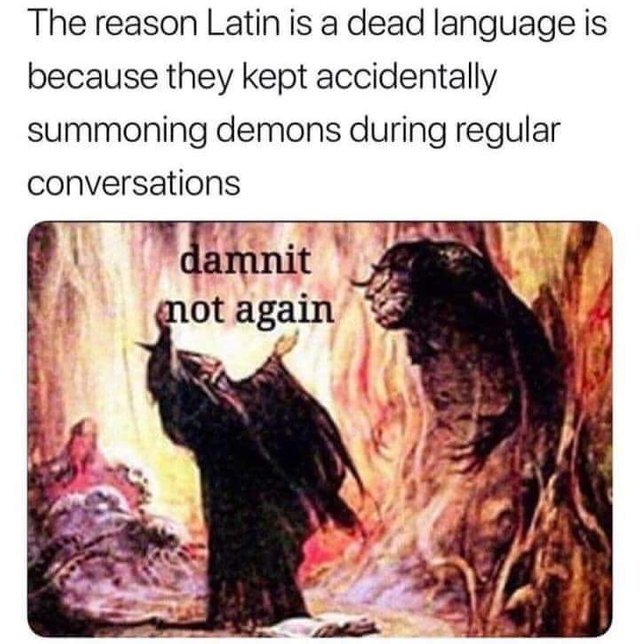
Despite being considered functionally dead, Latin remains the shared language of the supernatural and the scientific. We name beetles in the same tongue we banish demons, and neither can claim a more legitimate claim to the language than the other. Figures of mythology appear all over medicine, arguably one of the oldest scientific practices known to mankind.

In the United States, EMS workers are distinguished by the blue "Star of Life," displayed on a patch or even into the uniform itself. According to the NHTSA's Office of EMS, the six points represent the six functions EMS serves: detection, reporting, response, on-scene care, transit care, and transfer of care. At the center is the well-known symbol: the rod with a snake wrapped around it.

This symbol is often mistaken for the caduceus, symbol of the god Hermes, but that would be inaccurate. What is actually featured on the Star of Life is the Rod of AsclepiusDistinguished from the latter by its single snake and lack of Hermes' iconic wings, the Rod belongs to another figure entirely. (No disrespect intended towards Apollo or Asclepius, but I always thought that Hermes' caduceus actually made more sense. The god of the liminal-- travelers, communication, and transportation-- seems a more appropriate patron for the scoop-and-go model.)

The legend of Asclepius tells of a demigod son of Apollo (patron god of healers, among other things). The story tells of a young Asclepius performing some unknown act of kindness for a snake, who thanked him by licking his ear. This lick (or... sniff?) is said to have endowed Asclepius with knowledge of the secret magic of healing, which eventually led to his immortalization as the god of medicine.

Either way, it goes to show that magic has always been part of who we are, whether we call it that or not. Personally, I think we could all use a bit more whimsy, and there's no easier way to invoke it than to just reframe how we think of the mundane.

As long as I fork over my $20 copay, who can stop me from calling cough syrup a "potion"? My favorite barista now recognizes "I beseech thee, O Keeper: bestow upon me the elixir of life" as "Hi, one medium coffee please, extra oat milk and vanilla syrup." (Which I think is very cool of her.) 

Sometimes, you just have to believe in magic, even if it's just the everyday kind. Like the modern medicine, or 9-1-1. Or just a really good soup

Sunday, September 1, 2024

REWARD for Missing/Endangered Key (Key 69)

BOLO (with Reward!)

Saturday, August 10, 2024

Achievement Unlocked

I got the notification just before I walked into work. Congrats, the bubble read. New milestone reached! A little arrow prompted me to swipe open the message, but I already knew what it would read: 

You have been nicotine free for 1 month

I ignored the popup as I slumped into dispatch, unable to muster even the barest enthusiasm. It was looking like a long night already. 

Quitting nicotine had seemed like a good idea at first, before the side effects started to get really bad. I'd expected most of them. Migraines, nausea, anxiety, lethargy, cravings-- I'd been through them before, when I'd experimented with quitting. Never more than about fourteen days, though, which is probably why I wasn't expecting what hit me around week three: a complete loss of joy.

Day bled into listless day, and I started to forget what it felt like to be motivated by the desire to create. Drafts sit in my queue, half-finished and collecting cobwebs. The urge to write-- something as essential to my life as breathing or parmesan truffle fries-- had gone dormant. 

Gabe suggested I try to make some new additions to my most recent sticker series, the "achievement unlocked" collection, which celebrate career-defining call types while paying homage to the nerdy majority that makes up this job field. 

Another friend had suggested that, dispatch junkie that I was, what I needed was a hot call, something totally bizarre and dramatic to give me a different kind of high. Tonight could bring all kinds of excitement-- after all, you never knew what shift would be the one that defined your career.

I said that I doubted it. 

The call came in on the business line a bit after midnight. Picking it up was like a reflex, and a familiar feeling came over me, like all of my pieces were suddenly snapping together.

My greeting was met with a crisp male voice advising of a transfer from the highway. "I've got a caller on the line who is in active labor," he said. "It sounds like delivery is imminent." His cool, calm tone was pierced by a screaming that made me double back almost as much as his words.

Imminent was an understatement. As soon as I had dispatched the ambulance, I heard the wailing turn to cries of, "Catch him! Catch him!

And then it happened. A sound, clear and pure as rain, suddenly pierced through the static. His first cries were strong, and I knew even as I went though the steps of clearing his airways that this little guy had some healthy lungs on him. 

It was strange, talking a new mother through her first moments of parenthood. I felt, for the first time, entirely unqualified to be doing what I was doing. I felt a bit of the terror this brand-new mom must've been feeling as she took on the title on the side of a busy highway. But those moments were precious, too, as I listened to the first few moments of a whole life.

That morning, I went to the store after my shift, wanting some way to mark the occasion. I thought about sending a bouquet to the hospital, or buying a cigar like they do in the  movies-- but one way seemed maybe like an invasion of privacy, the other a recipe for nicotine relapse. 

Instead, I bought a single cupcake, lit a candle, and said a little blessing, meditating on life and new beginnings. I let myself appreciate what a strange and wonderful job I have that I got to be, in a small way, part of that magical moment. 

Just as I had started to lose my spark, just as I'd forgotten the magic of emergency response work-- the Dispatch Gods were there to remind me there's magic in it still. It's hard to be apathetic, even in the middle of extreme dopamine withdrawal, when you get to help deliver babies on the side of the road.

There's an old first responder tradition where, if you help deliver a baby in the field, some agencies will award you a commemorative stork pin. I can't speak for EMS directly, but among dispatchers, that pin is coveted like no other accolade. 

My agency doesn't participate in the stork pin tradition, but that's okay. I doubt I'll ever forget that night. As I fight my way through the remnants of this depression (as well as the resulting creative dry-spell), I'll remember that call as the example of what makes this job so worthwhile.

Edit: Two weeks later

As it turns out, Kenneth thought that this childbirth call made for a good opportunity to take to the Chief a petition he's been sitting on for a while. In order to cultivate a positive work environment, he believes it important to recognize the contributions of officers and civilian dispatchers alike. 

As a result of Kenneth's advocacy, the Chief thought it appropriate to present me with an official letter of commendation for the childbirth call, and-- yes-- a stork pin. I had the letter framed and it is now on proud display next to my patch collection, and the pin is now a symbol of one of my absolute favorite dispatch moments.

Wednesday, July 10, 2024

Nobody's Coming

 ATTENTION. ATTENTION. THIS IS NOT A TEST. 

THIS IS YOUR EMERGENCY ALERT SYSTEM announcing THE COMMENCEMENT OF THE ANNUAL PURGE. COMMENCING AFTER THE SIREN, ALL CRIME WILL BE LEGAL FOR TWELVE HOURS.

9-1-1 IS HEREBY SUSPENDED. POLICE, FIRE, AND EMERGENCY MEDICAL SERVICES WILL BE UNAVAILABLE UNTIL 7 AM, WHEN THE PURGE CONCLUDES.

GOD BLESS AMERICA, A NATION REBORN. MAY GOD BE WITH YOU ALL.

This isn't the exact script from the Purge movies, but the gist is the same: starting after the siren, everything is legal, and nobody is coming to help. 

I can (and do) make jokes about it every time a new Purge movie or show comes out. "Throw a party-- when else are we all going to have time off together?"

And yet, there is something about that line that sends a chill down my spine. I have a pretty strong stomach for horror, so it seems like a pretty tame choice for "movie line that scares me most." And yet, far scarier than chainsaw killers or a 12-hour anarchy would be that moment of realization of: Nobody is coming to help.

I grew up in a world of relative security, promised by every trusted adult ever that help was never more than three button-pushes away. The safety net of 9-1-1 was always a given; we could summon these almost larger-than-life figures, professionals to whom we could transfer all of the responsibility of handling a disaster as soon as they rolled up with their flashing lights and screaming sirens.

Sergeant Pepper has a personal motto he lives by: "Nobody's coming: it's up to us." It's a bit of advice you can find tattooed on hardcore military guys with a doomsday complex (often the same guys who pick fights on Twitter about their Constitutional right to carry a semi-automatic into Walmart). It can also be seen in at least one spot in the police station, stitched in bold letters across a large flag pinned to the men's locker room wall. Or so I've been told. 

There definitely is wisdom in it: it's never a good idea to make yourself helpless by way of overreliance on those safety nets we take for granted. After all, those systems are, like the humans that created them, far from infallible. While the government has never (as far as we know) intentionally disabled emergency services, there have been times when 9-1-1 has failed-- and the frequency of these failures seems to be growing with every passing month. 

In April of 2014, over eleven million people across seven states lost access to 9-1-1 service as a result of a coding error by CenturyLink, their 9-1-1 service provider. The entire state of Washington was left to fend for itself during this time, unable to call for help even in the most dire of circumstances. Somewhere around 5,600 different callers were left wondering why 9-1-1 wasn't going through, including one resident by the name of Alicia Cappola.

While home alone with her five-year-old twins, Cappola suddenly found herself in a terrifying situation: somebody was trying to break into her house. Naturally, she did the most natural thing first: she called 9-1-1. But as call after call failed, she must have realized that she was on her own. After 37 failed attempts, she gave up, arming herself with a kitchen knife and confronting the intruder. 

Cappola confronted the intruder with her knife branded, and thankfully, she was successful in scaring him off. She was unable to make contact with emergency services until over an hour later, at which point the would-be thief had long since disappeared.

Similar outages have plagued the country over the years. 2017 saw one of the largest outages in the history of 9-1-1, with approximately 12,600 callers left unable to reach emergency services over the course of five hours. A string of cyber-attacks in 2018 struck hundreds of PSAPs across the country, costing millions and putting countless people out of reach of help. Just this year, outages have also hit Nevada, Nebraska, and South DakotaHonoluluparts of Texas and California*, and all of Massachusetts.

*It should be noted that the 2024 Bay Area outages were the result of copper wire thieves, which by itself isn't funny... but I'm just picturing someone in prison asking them, "What are you in for?" and their answer just being, "Oh, you know. I just stole 9-1-1."

In many cases, as soon as services were back up, the call volume spiked, mostly people who had seen the mass texts announcing the outage was fixed calling to see if it was, in fact, fixed. This led to many PSAPs being overwhelmed, often even further delaying responses to actual emergencies that occurred during and after the outage.**

**I think this goes without saying, but please, please don't do this.

Contrary to what our kindergarten teachers told us, 9-1-1 isn't infallible, and for some reason, it seems especially vulnerable to failure these days. Though no small amount of effort goes into keeping it up and running, at the end of the day it is still a human institution, and therefore is as fallible as we are.

However, I think it's also pertinent to take the Sarge's advice with a grain of salt. 

First of all, there is also a stark difference between "nobody will come" and "nobody knows to come". The scenario proposed by the Purge movies is one where emergency services are intentionally suspended, whereas real-life outages are usually failures of the technology. Somehow, to me, neglect of aid due to human error is a far less terrifying, since (a) it means that there's (probably) no grand conspiracy out to kill you, and (b) all you have to do to circumvent the problem is find an alternate way to communicate with emergency services.

That leads me to my second point: a failure of one link in the response chain does not necessarily spell doom. The goal of any emergency management or response agency is to have as many redundancies as possible, because our job is to anticipate and subvert the worst case scenarios. 

There are also standards in place meant to protect access to emergency services. Though some accessibility measures vary in quality and accessibility from region to region, others are mandated through federal legislationFor example, the FCC requires that unlisted phones (i.e. without active cell service) still be able to call 9-1-1. Pay phones (which do still exist, believe it or not) will be able to reach 9-1-1 even if you can't scrounge up a quarter. 

Most importantly, the vast majority of agencies have business lines along with 9-1-1. Where I work, dispatchers are trained to anticipate that an emergency can come from any line, so I always encourage people to save their local agencies' non-emergency numbers in their phones and write them on the fridge-- or better yet, memorize them. 

Essentially, short of every single phone tower in the region being simultaneously swallowed by the earth, the chances of ever being completely cut off from emergency services while in or near human civilization is slim to none, as long as you take the time to prepare for potential outages.

These outages can also serve as a reminder, however unpleasant, of what happens when we become complacent. As dispatchers, we are warned again and again against complacency. "Complacency Kills" is an unofficial tagline, reminding us that we are the safety net, both for the public and for our responders. But as a citizen, it's easier to take things for granted. It's never a good idea to have so much faith in the system that we neglect to prepare for potential disaster. 

Not this elaborate, though.

It is with this in mind that I am starting a new series, most likely to be updated intermittently with History Lessons with Dizzy. The new series, which I plan to call ISHTF ("If Shit Hits the Fan") will be investigative, looking into different aspects of emergency management and response, as well as speculative, coming up with plans that a hypothetical individual might take when preparing for large-scale disaster. 

I hope to cover topics such as how historical disasters were handled by emergency management agencies, the development, function, and limitations of EAS, and speculation on what I think would actually happen behind the dispatch desk if the apocalypse broke out tomorrow.

In the meantime, stay safe out there, and whatever you do... don't call 9-1-1 to see if it's working. Don't make me hunt you down next Purge. After all, I do have that night off.

For works cited, see here.